Why High-End Audio is the Most Underestimated Tool in NGO Advocacy (2026 Guide)
Learn why professional audio engineering is the decisive factor in NGO advocacy storytelling. Discover how pristine sound, 32-bit float recording, and acoustic clarity drive donor empathy and policy change in East Africa.
Introduction: The Psychology of the Ear in Humanitarian Storytelling
In visual storytelling, an immutable psychological truth exists: audiences will readily forgive a soft or grainy image, but they will instantly tune out distorted, unintelligible, or noisy audio.
For international NGOs, United Nations agencies (such as UNHCR, UNICEF, and the WHO), and development institutions operating in Rwanda and East Africa, the human voice is the moral core of every advocacy campaign. When a mother in a rural clinic shares her family's healthcare journey, or when an agricultural innovator explains food security solutions, the emotional weight of their testimony lives in the cadence, timbre, and intimacy of their voice.
When that testimony is marred by wind noise, room echo, or microphone clipping, viewer empathy disconnects. Headquartered locally in Kagarama Sector, Kicukiro District, Kigali, Rwanda, GoodAV treats audio engineering not as a secondary technical detail, but as the foundational catalyst of advocacy impact.
1. Psychoacoustics & Donor Engagement: The Science of Vocal Intimacy
Neuroscience reveals that the human auditory cortex processes vocal emotion faster than the visual cortex processes facial expressions. When speech is recorded with pristine acoustic clarity:
Increased Empathy and Trust: Clean, close-mic audio creates perceived proximity. The listener feels as if the beneficiary is speaking directly to them in the same room, triggering authentic emotional resonance.
Higher Viewer Retention: Distorted or muddy audio causes cognitive fatigue. Viewers on LinkedIn, YouTube, or donor portals drop off within 10 to 15 seconds if they have to strain to understand dialogue.
Enhanced Donor Conversion: Independent studies in non-profit communications show that videos featuring high-fidelity sound generate up to 40% higher donation conversion rates and deeper engagement during fundraising galas.
2. The Harsh Acoustic Realities of Field Filming in East Africa
Capturing broadcast-quality audio in Rwanda presents unique environmental challenges that camera-mounted microphones cannot resolve:
Tin Roofs & Tropical Rain: Heavy equatorial downpours hitting corrugated metal roofs create deafening ambient rumble that completely masks dialogue.
High-Altitude Mountain Winds: In the volcanic highlands of Musanze or the open ridges of northern Rwanda, crosswinds produce extreme low-frequency buffeting on unprotected microphone diaphragms.
Reverberant Brick & Concrete Classrooms: Rural schools and health clinics often lack soft furnishings, causing heavy acoustic slap-back and speech unintelligibility.
Generator Noise: In off-grid rural locations, diesel generators introduce constant electrical hum and mechanical drone across the audio spectrum.
3. GoodAV's Field Audio Architecture & Technical Standards
GoodAV solves these environmental hurdles through professional sound engineering practices and specialized hardware:
32-Bit Float Digital Recording: Using Sound Devices multi-track digital audio field recorders, we record with a massive dynamic range that makes digital clipping impossible. Whether an interviewee whispers in confidence or speaks passionately with sudden volume, every syllable is preserved with zero distortion.
Dual-Lavalier Redundancy: We deploy Lectrosonics and Sennheiser digital wireless systems with dual-capsule redundancy, concealed carefully inside clothing to eliminate wind buffeting and wardrobe rustle.
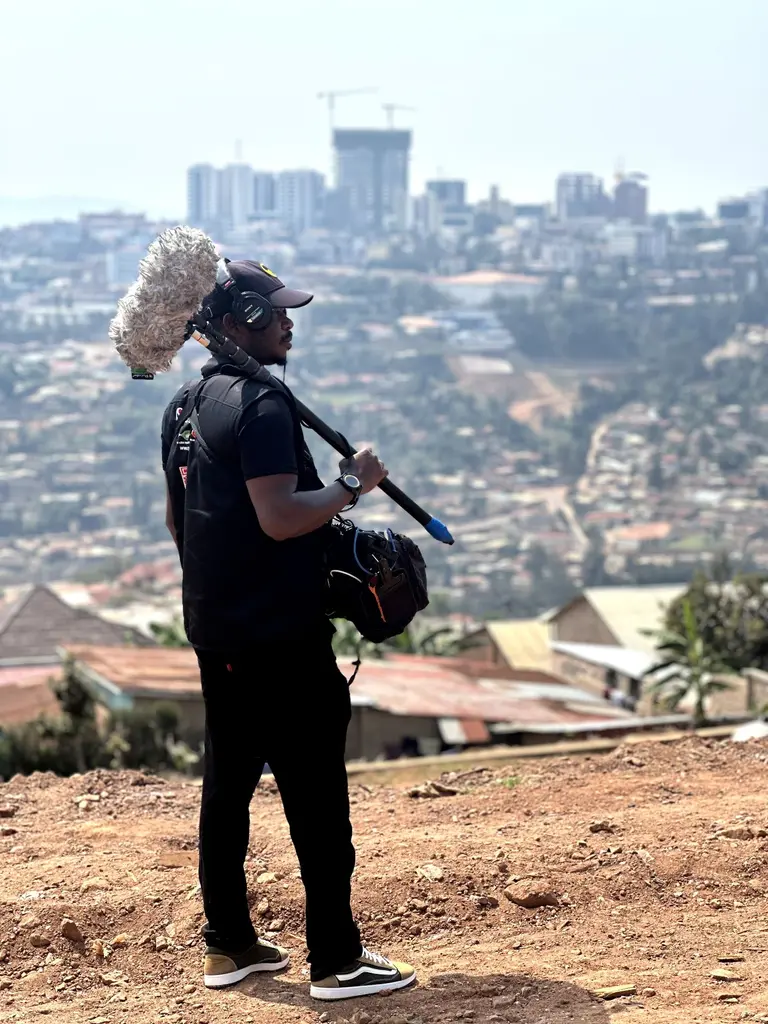
Directional Shotgun Microphones in Rycote Blimps: Our sound recordists operate balanced shotgun microphones (Sennheiser MKH series) encased in full wind-protection zeppelins, isolating voices while rejecting ambient background noise.
Multilingual Audio Monitoring: GoodAV sound technicians are fluent in Kinyarwanda, French, English, and Swahili. They listen actively to the emotional nuances of native dialogue in real time, alerting directors immediately if an interview point is masked by an unexpected noise.
4. Ethical Storytelling & Dignity for Beneficiaries
High-end audio is fundamentally about respecting the dignity of the people being filmed. Sterile, hasty camera setups that push awkward mics into people’s faces create tension. GoodAV’s experienced sound recordists work with warmth and sensitivity, explaining the equipment gently, ensuring interviewees feel comfortable, respected, and heard.
Custom Tailored Quotations for Non-Profit Budgets
GoodAV understands that non-profit and humanitarian organizations must justify every donor dollar. We do not apply arbitrary corporate markups:
Whether you require a lean, single-recordist documentary package for community storytelling or a full multi-unit production fleet for an international UN campaign across Rwanda, GoodAV provides fully itemized, accessible quotations tailored to your exact scope. No surprises, no hidden line items—just guaranteed broadcast excellence.
Frequently Asked Questions (FAQ) About NGO Audio
Why isn't a camera-mounted shotgun microphone sufficient for field interviews?
Camera-mounted microphones are too far from the speaker's mouth. In acoustic physics (the Inverse Square Law), doubling the distance between the microphone and speaker cuts the direct vocal sound level by 75% while amplifying ambient room noise and reverberation. A dedicated lavalier or boomed microphone positioned inches from the speaker is essential for clear dialogue.
What is 32-bit float audio and why is it crucial for documentary shoots?
32-bit float is an advanced digital audio format with enormous dynamic range. Unlike standard 24-bit audio, 32-bit float cannot be digitally clipped or distorted by sudden loud sounds, nor does it suffer from noise floor hiss when quiet whispered speech is boosted in post-production. It guarantees flawless takes in unpredictable field conditions.
How does GoodAV handle translation and multilingual interviews in Rwanda?
Our team includes native speakers of Kinyarwanda, French, English, and Swahili. We ensure proper timecode logging, certified local translation, and culturally nuanced subtitling that captures the true intent of the speaker.
Where is GoodAV headquartered, and how can we book your sound crew?
GoodAV is located in Kagarama Sector, Kicukiro District, Kigali, Rwanda. Contact our production office at goodav.net/contact to discuss your upcoming advocacy campaign.
Share this article
Help others discover this content